
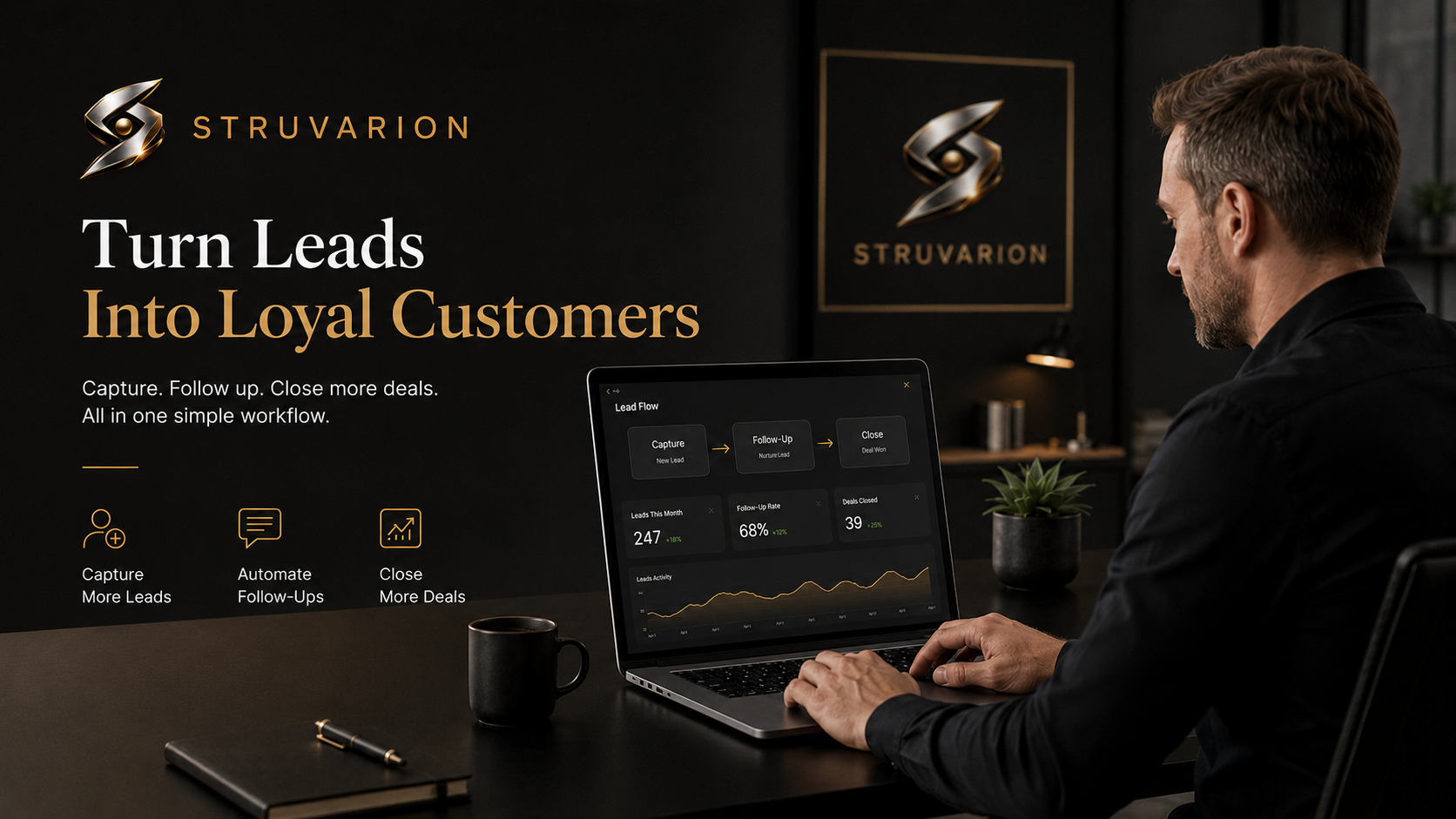
Most lead generation does not fail because the business has a bad offer. It fails because the lead has nowhere clear to go after they show interest.
A person clicks a post, scans a QR code, fills out a form, visits a website, or asks a question. Then nothing happens fast enough. The business owner gets busy. The lead gets distracted. The opportunity cools off. And just like that, money quietly walks out the side door wearing flip-flops.
Lead generation is not just about getting attention. It is about creating a simple path from interest to action. If that path is missing, messy, or too slow, the lead usually disappears.
Why Lead Generation Matters
Every real business needs a steady way to bring in new conversations. That does not mean every business needs complicated funnels, expensive ads, or a full marketing department.
It means the business needs a simple system that answers three basic questions:
- How does a potential customer discover us?
- What action do we want them to take next?
- How do we follow up after they take that action?
That is the part many businesses skip. They focus on the first question only. They post more. They run ads. They print flyers. They share links. But they do not build the rest of the path.
Attention without follow-up is not a lead system. It is just noise with a logo on it.
What Usually Goes Wrong
The biggest problem is that most small businesses treat leads like random events instead of part of a process.
Someone messages the Facebook page. Someone scans a QR code. Someone calls from Google. Someone fills out a contact form. Someone asks for pricing at an event. All of those leads may be valuable, but they often land in different places.
That creates problems fast.
- The owner forgets who asked what.
- The customer never gets a quick response.
- The team does not know which leads are hot.
- Follow-up depends on memory instead of a system.
- Marketing feels busy, but sales do not grow consistently.
The issue is not effort. Most business owners are working plenty hard. The issue is structure.
A lead that is not captured clearly is easy to lose. A lead that is not followed up with quickly is easy to forget. A lead that is not organized is hard to turn into a customer.
How a Simple Lead Generation System Works
A good lead generation system does not need to be fancy. It needs to be clear.
Here is the simple version:
- Attract attention with a post, ad, QR code, Google listing, referral, video, flyer, or event.
- Send people to one clear action such as filling out a form, booking a call, joining a list, claiming an offer, or requesting information.
- Capture the lead with their name, phone number, email, and reason for interest.
- Deliver a useful next step such as a confirmation page, email, SMS, booking link, or helpful resource.
- Follow up with a clear message that helps them make the next decision.
- Track what happened so the business knows what is working.
That is the system behind the software. The tools are only there to support the path.
Step 1: Give People a Reason to Respond
A lead system starts with a reason for someone to raise their hand.
That could be a discount, quote request, consultation, free guide, appointment, event registration, service menu, pricing request, checklist, or simple “learn more” offer.
The offer does not need to be dramatic. It needs to be clear. A confused person usually does nothing.
Step 2: Make the Next Action Obvious
Do not make people hunt for the next step. If the goal is to book, send them to booking. If the goal is to request a quote, send them to the quote form. If the goal is to join a training, send them to registration.
One page. One purpose. One next step.
That alone can clean up a lot of marketing mess.
Step 3: Capture Useful Information
A lead form should not feel like a tax return. Ask for what the business actually needs to respond well.
For many businesses, that means:
- Name
- Phone number
- What they are interested in
- When they need help
That is usually enough to start a real conversation. The goal is not to collect every detail upfront. The goal is to make the first follow-up easier and more relevant.
Step 4: Follow Up Fast
Speed matters. When someone reaches out, they are usually in a decision window. They may be comparing options. They may be trying to solve a problem right now. They may have asked three other businesses the same question.
A simple confirmation message can help immediately:
“Thanks for reaching out. We received your request and will follow up shortly. Here is what happens next.”
That kind of message is not magic, but it gives the customer confidence. It tells them they are not shouting into the void.
Step 5: Keep the Follow-Up Human
Automation should not make the business sound cold. Good follow-up feels helpful, not pushy.
A strong follow-up message usually does three things:
- Reminds the person why they reached out.
- Gives them the next simple step.
- Makes it easy to reply, book, call, or buy.
That is it. No need to write a novel. Save the Shakespeare for people with tiny candles and emotional capes.
A Simple Real-Business Example
Imagine a local cleaning company wants more commercial cleaning leads.
The owner posts on Facebook about office cleaning and includes a simple call to action: “Need a cleaner quote for your office? Request a quick estimate here.”
The link goes to a simple page with a short form. The form asks for name, business name, phone, email, square footage, and type of cleaning needed.
After the form is submitted, the customer lands on a thank-you page that says what happens next. They also receive an email confirming the request.
The business gets notified immediately. The lead is stored in one place. The owner or team can follow up by phone or email with context instead of guessing.
That is a lead system.
Nothing wild. Nothing complicated. Just a clear path from interest to follow-up.
Where Struvarion Fits
Struvarion is built around the idea that business systems should be simple enough to actually use.
A business may use a QR campaign to send people to a quote request. It may use a digital business card to capture networking leads. It may use email marketing to follow up with prospects. It may use SMS follow-up for appointment reminders. It may use booking software to let people schedule without back-and-forth messages.
The important part is not collecting tools like baseball cards. The important part is connecting the tools into a working path.
That is where a system mindset matters.
For example:
- StruvQR can help send people from print materials, signs, events, or tables to a specific action page.
- StruvCard can help turn networking conversations into trackable next steps.
- StruvMail can help continue the conversation through email.
- StruvSMS can help with timely follow-up when appropriate and permission-based.
- StruvBooking can help turn interest into scheduled appointments.
The goal is not to overwhelm the business owner. The goal is to make the next step easier for the customer and easier for the business to manage.
The Clear Next Step
If your business wants better lead generation, start by mapping the current path.
Write down the answer to these questions:
- Where do most leads come from right now?
- What action do we ask them to take?
- Where does their information go?
- Who follows up?
- How fast does that follow-up happen?
- What message do they receive after reaching out?
- How do we know which source created the lead?
You will probably find the weak spot quickly. Most businesses do.
Do not start by adding five more tools. Start by fixing the path. Make the next action clear. Capture the lead. Follow up fast. Track the result.
That is how lead generation becomes a system instead of a guessing game.
To learn more about simple business systems and how they connect, visit the Struvarion Learn Center.
Keep learning the system.
Struvarion is built around simple business systems: attention, lead capture, follow-up, customer journeys, training, offers, and practical growth.
Explore Training